FY2024
(October 1, 2023-September 30, 2024)
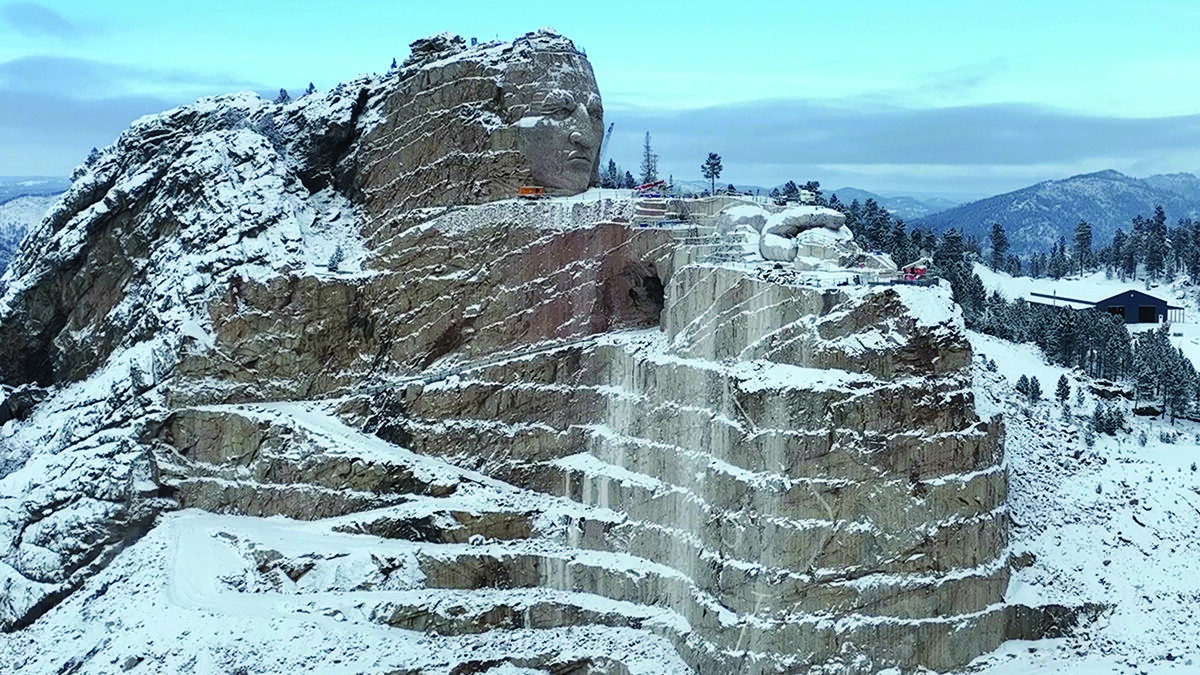
Mountain Carving Update
The Likeness of Crazy Horse
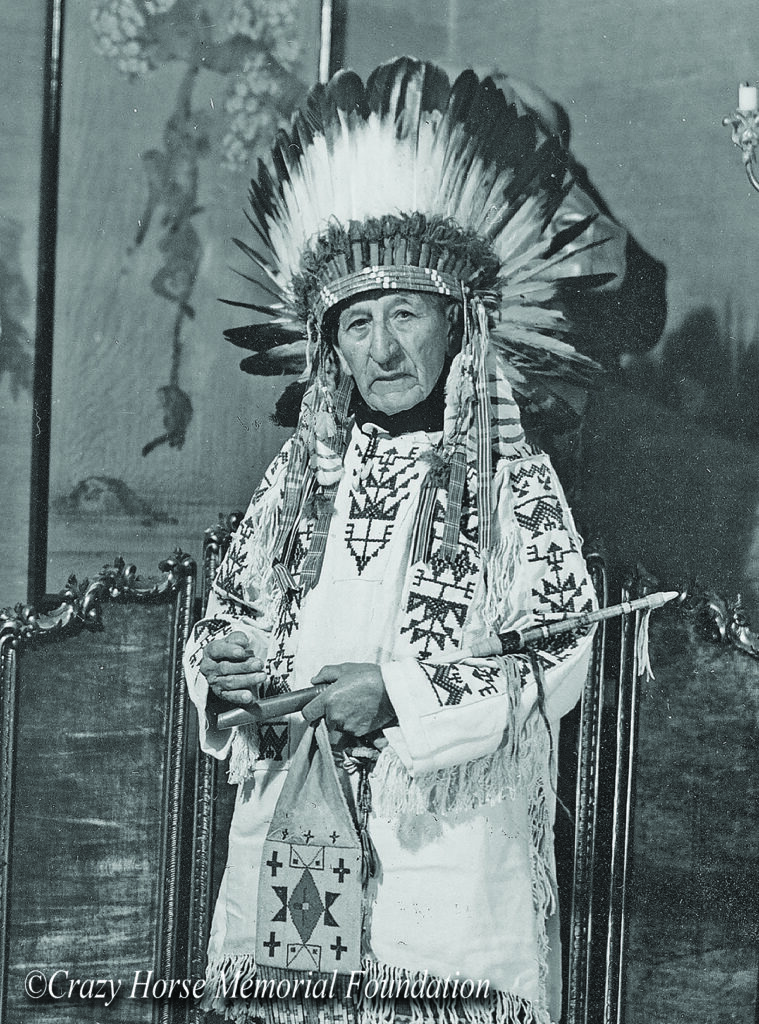
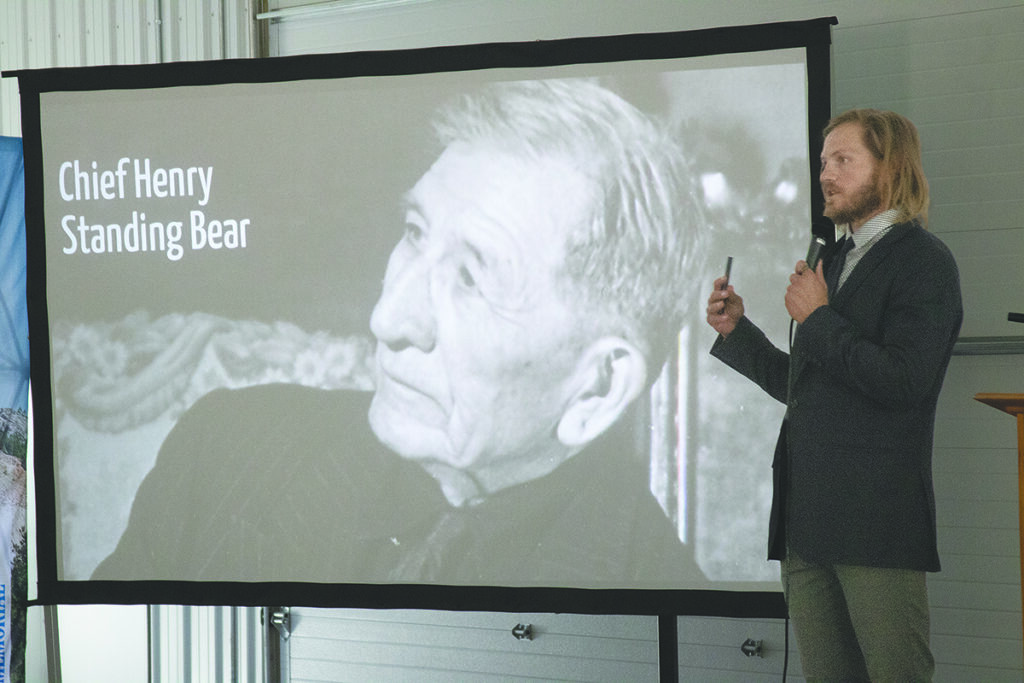
Chief Henry Standing Bear envisioned a Mountain Carving as an eternal tribute to Crazy Horse, the Lakota leader. The Memorial would see Crazy Horse once again riding through and watching over the Black Hills. Chief Standing Bear and Sculptor Korczak Ziolkowski collaborated. In making a model to guide the Carving, they created a symbol to honor all Native Americans of North America.
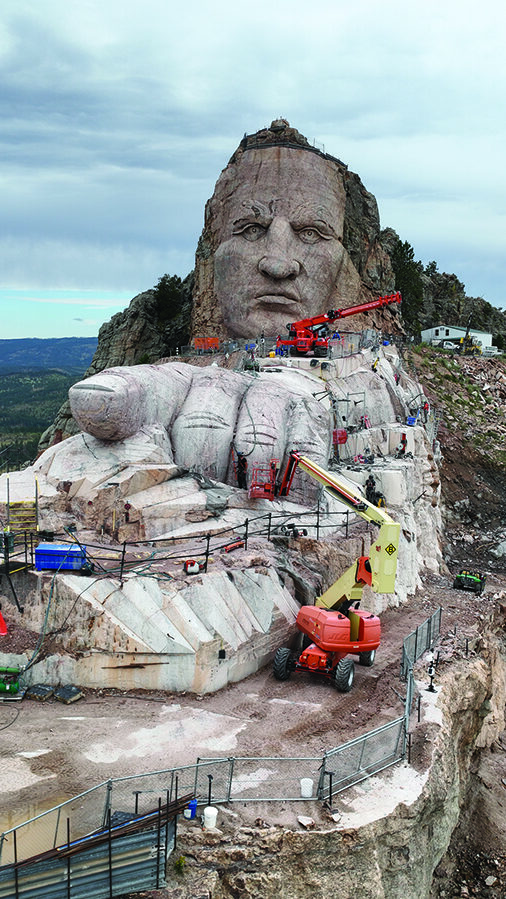
The model combined the artistic capabilities of Korczak with the recollections and insights of Chief Standing Bear and other elders. While word pictures of Crazy Horse aided the process, the lack of photographs enlarged the Carving’s reach. It would serve as more than a monumental reflection of one man, representing all Indigenous America.
Not only the Mountain Carving invokes the memory of Crazy Horse. The nature of the process itself echoes his life. Crazy Horse had powerful visions and persevered towards their realization. He held fast to freedom and independence for himself and those who followed him. The undertaking to carve a memorial of the man would, in turn, be impossible without vision and perseverance.
In the early 1930s and around the age of 57, Chief Henry Standing Bear had his own powerful vision of a memorial in the sacred Black Hills to let “the white man know the red man has great heroes, also.” Taking the lead in this project—with the backing of fellow chiefs and elders—Chief Standing Bear persevered. It took nearly a decade of untold rejections to at last find a sculptor willing to take on the project.
After finding a sculptor, it took nearly another decade for work to begin. There were numerous setbacks. Domestic and international upheavals, like World War II, intervened. The top officials of the Department of the Interior were against a carving in the Black Hills. The story of the young project in the face of adversity is an epic in and of itself. To boil it down to its essence, Standing Bear never relented.
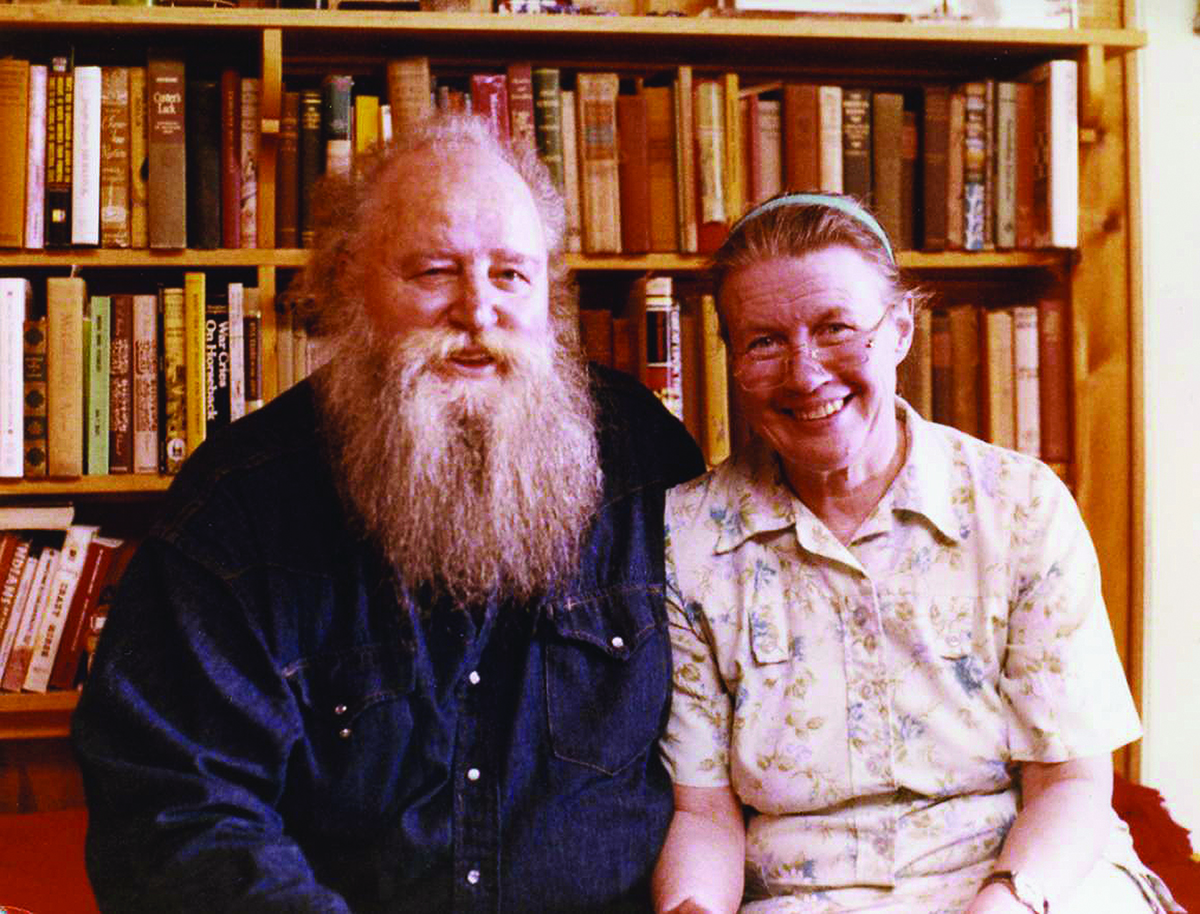
The challenges did not end with the first blast on the Mountain in 1948. Joining Standing Bear, catching his vision, Korczak and Ruth Ziolkowski had innumerable reasons to give up. The project was not viable. The carving was bigger than any other carving in the world. The resources were nonexistent. The obstacles were unending. Yet, Korczak and Ruth persevered—and had 10 children who also worked on the project.
It’s been nearly 77 years since the first blast and some 94 years since Chief Standing Bear first dreamt of carving Crazy Horse. The Mountain Carving continues to demand vision and perseverance. Obstacles still abound. Causes for frustration crop up. Yet the powerful founding vision and our heritage of perseverance continue to drive progress. We hope that our founders—and Crazy Horse himself—would be proud that we build on their legacy. In contrast to them, we have the incredible privilege to see much of what they envisioned taking shape before our very eyes. What follows are accounts and figures that highlight our recent efforts.
Unprecedented Vision
We need a solid understanding of the scope of the Mountain Carving. This helps us measure progress. Also, when the enormity of the Mountain Carving is grasped, the vision and perseverance of our founders stand out. The immensity of the project would have dissuaded practically anyone, reasonable or not. It seems to have driven our founders to single-minded determination.
It’s widely believed that Crazy Horse Memorial® is the largest carving in the world1. How do we measure this? Height alone seems insufficient: carvings are three-dimensional; height compares a single dimension, which can mislead. A tall statue may be narrow, and thus height would overstate its size. What is more likely, however, is that height understates the difference between a taller and a shorter carving, making the taller one seem only somewhat larger than the shorter one.
Consider Mount Rushmore. The height from the bottom of Lincoln’s face to the top of Washington’s head is approximately 90 feet. At a projected final height of 563 feet, this makes Crazy Horse Memorial® 6.25 times taller. While this sounds impressive, it understates the difference in size in important respects. For instance, the sheer amount of surface area that must be carved to complete Crazy Horse Memorial® is not only 6.25 times more than Mount Rushmore. At 641 feet long, Crazy Horse Memorial® will also be about 3.5 times wider than Mount Rushmore. Though only a two-dimensional comparison, this would lead to the estimate that Crazy Horse Memorial® will be 21.8 times larger than Mount Rushmore, substantially greater than 6.25 times larger.
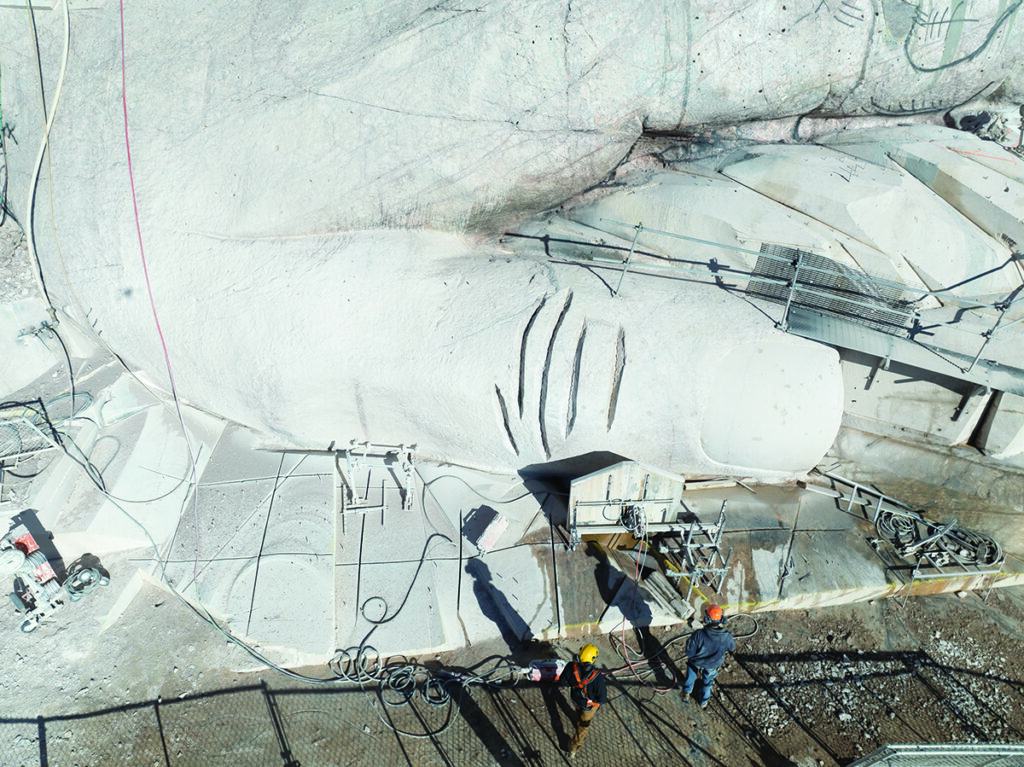
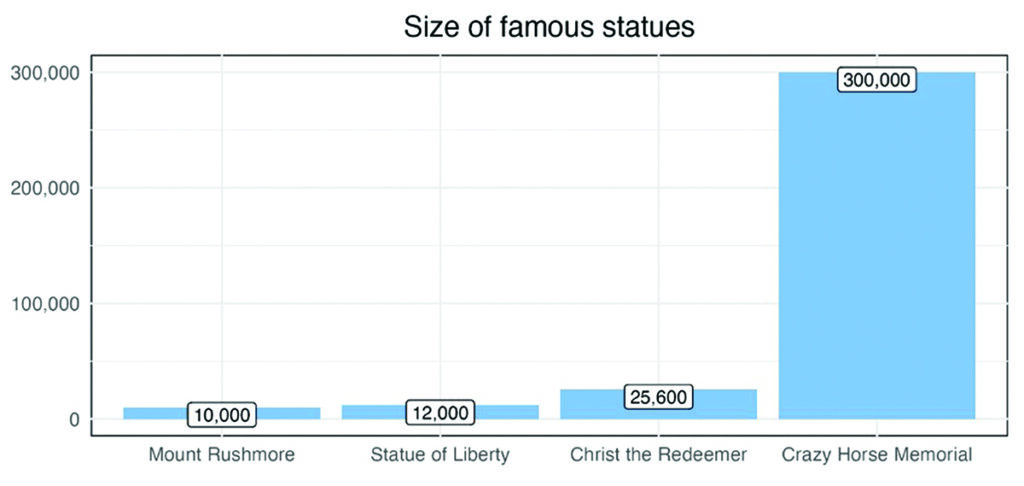
The better we measure the size of Crazy Horse Memorial®, the better we grasp its enormity, particularly if we can compare it to other famous carvings and statuary. One useful measurement for comparison is surface area—this is a three-dimensional measurement that accounts for the area of the sculpted surface of a statue. In a real sense, it shows precisely how much material must be shaped. We can easily calculate it for Crazy Horse Memorial®, since we have a high-quality, water-tight computer model of the surface of the finished carving, based on high-resolution scans. Unfortunately, most famous sculptures do not report surface area nor offer high resolution scans. If we want comparisons, we need to estimate them ourselves. There are approaches of various sophistication to do so, and we are working to get the best possible estimates. For now, we have some initial estimates of three statues of interest: Mount Rushmore (10,000 square feet)i, The Statue of Liberty (12,000 square feet)ii, and Christ the Redeemer in Rio de Janeiro (25,600 square feet)iii. The projected finished surface area of Crazy Horse Memorial® is 300,000 square feet. Figure 1 visualizes this comparison.
That means Crazy Horse Memorial® is estimated to be about 12 times larger than Christ the Redeemer, 25 times larger than the Statue of Liberty, and 30 time larger than Mount Rushmore (note that only Mount Rushmore is a carving or made from granite like Crazy Horse Memorial®, meaning the sculpting process is far more painstaking than those of the other two statues). When people ask why Crazy Horse Memorial® takes so long to carve, these estimates provide a great response: it is so much bigger than any other carving and bigger than most if not all other statues in the world. If you were to carve Crazy Horse Memorial® at the same pace as Mount Rushmore was carved, it would require approximately 404 years to finish.
Our founders had no business taking on this challenge. It is so far beyond reasonable for a non-profit foundation with virtually no resources. Yet, as if this weren’t enough, their dreams for the Memorial went far beyond the Mountain Carving. In many ways, the Carving is the easiest part of the vision.
We’re In a New Era of Carving
For most of the history of Crazy Horse Memorial®, carving took much longer than it did at Mount Rushmore. Over 74 years, about 5000 square feet were carved at Crazy Horse Memorial® (mostly Crazy Horse’s Face), compared to 10,000 square feet in 14 years at Mount Rushmore. This reflects a huge gap in resources, with government funding backing Mount Rushmore. It also reflects the need to remove far more rock at Crazy Horse Memorial® before finish work and detail carving could begin.
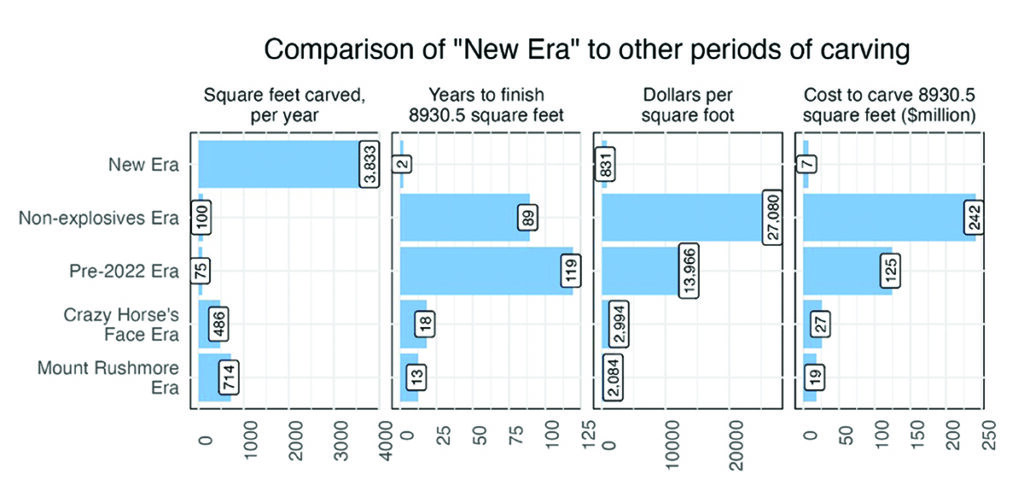
Since June of 2022, the pace of carving at Crazy Horse Memorial® has dramatically changed. From June of 2022 through September of 2024—a period of 2.3 years—an estimated 8930.5 square feet have been carved to within at most 1 inch of finished grade, with much of it being completely finished. In the last 2.3 years, we’ve seen progress that we would have expected to take a lifetime and hundreds of millions of dollars just a few years ago. Figure 2 illustrates this in terms of how long carving 8930.5 square feet would have taken in other periods, referred to here as “eras.” What has happened since June of 2022 is called the “New Era”—the stark contrast to other eras shows the reason for the name. In terms of the average square feet per year, the “New Era” is about 5.4 times faster than the “Mount Rushmore Era” and 7.9 times faster than “Crazy Horse’s Face Era.” “Pre-2022 Era” refers to the entire history of carving Crazy Horse Memorial® up to June of 2022; the “Non-explosives Era” starts in 2015 when we were advised by engineering consultants to not use explosives anymore and runs to June of 2022. The “New Era” is 38 and 51 times faster than these eras, respectively. Perhaps surprisingly, the “New Era” is also the most cost effective—note all numbers are inflation adjusted to 2022 dollars. The final column of Figure 2 shows the cost of carving 8,930.5 square feet (what’s been done since June of 2022). In the “New Era” it cost about $7.43 million, compared to $18.6 million for the “Mount Rushmore Era” and $26.7 million for the “Crazy Horse’s Face Era.” Of course, these were different eras when explosives were used. If we compare the “New Era” cost of $7.43 million to the “Non-explosives Era” cost of $242 million, we see that we carved 8,930.5 square feet for 3% of what it would have cost during the “Non-explosives Era.” The second column shows that what took us 2.3 years in the “New Era” would have taken 89.3 years in the “Non-explosives Era” and 119 years in the “Pre-2022 Era.”
A Rock and a Hard Place
An estimated 3010.7 square feet of surface area was carved within at most of 1 inch of finished grade in the prior fiscal year (October 2023 through September 2024). This was one of the best results in the history of mountain carving—here or anywhere else. Yet, it was not quite up to the pace we achieved from June of 2022 through May of 2023 when we pushed to carve the hand before the unveiling for the 75th Anniversary of the first blast on the Mountain. Given the challenges we faced and the other projects we embarked on, as well as some strategic delay, to have hit 3010.7 square feet last fiscal year is incredible.
Last fiscal year, nearly all work was on the “back side” of the Mountain, mostly focused on Crazy Horse’s Left Arm (that is, the side not visible from the Welcome Center). 85.5% of saw cuts were on the back side, with 74.3% being on Crazy Horse’s Left Arm. 85.4% of the surface area carved to within an inch of finished grade was on the back side of Crazy Horse’s Left Arm.
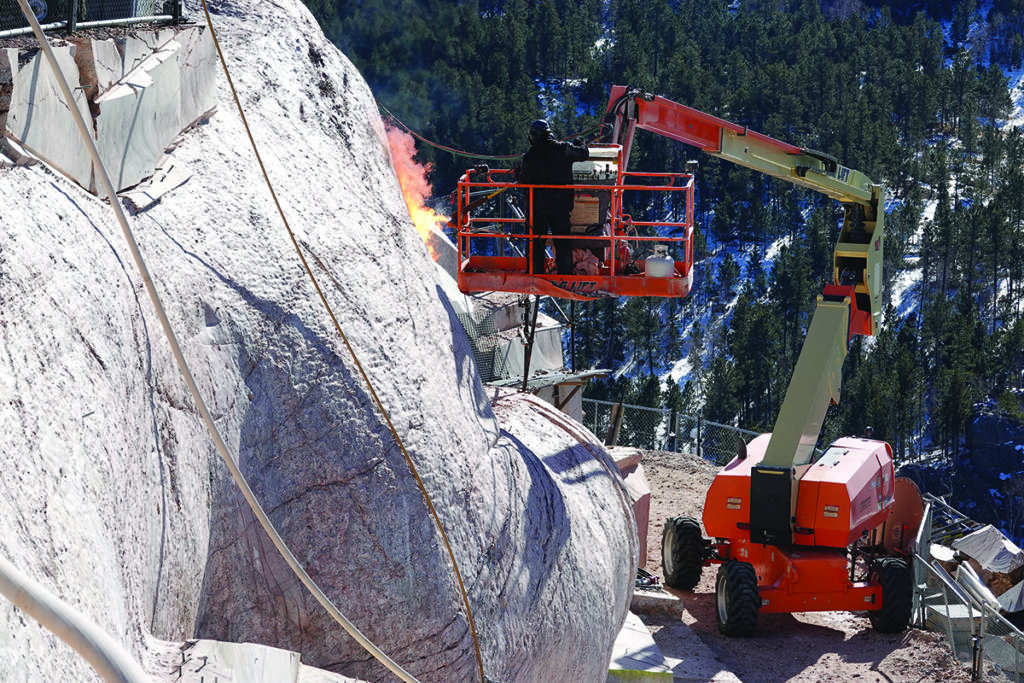
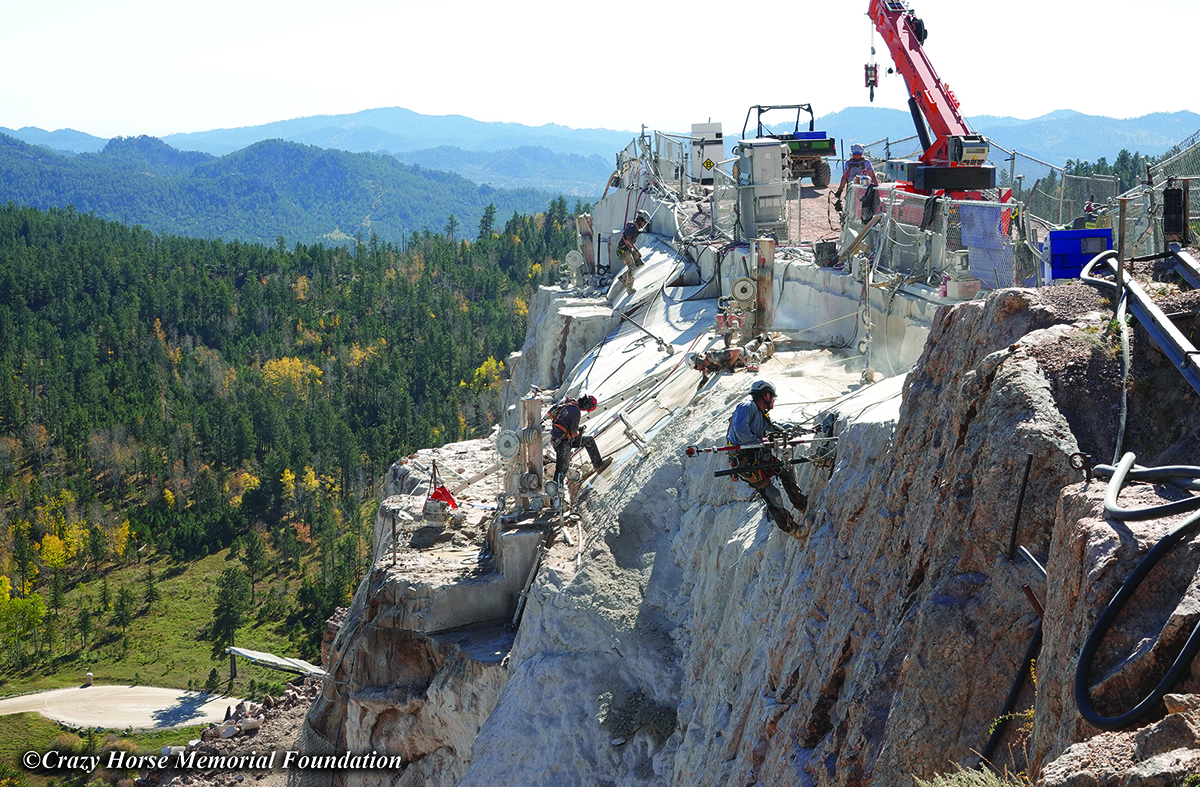
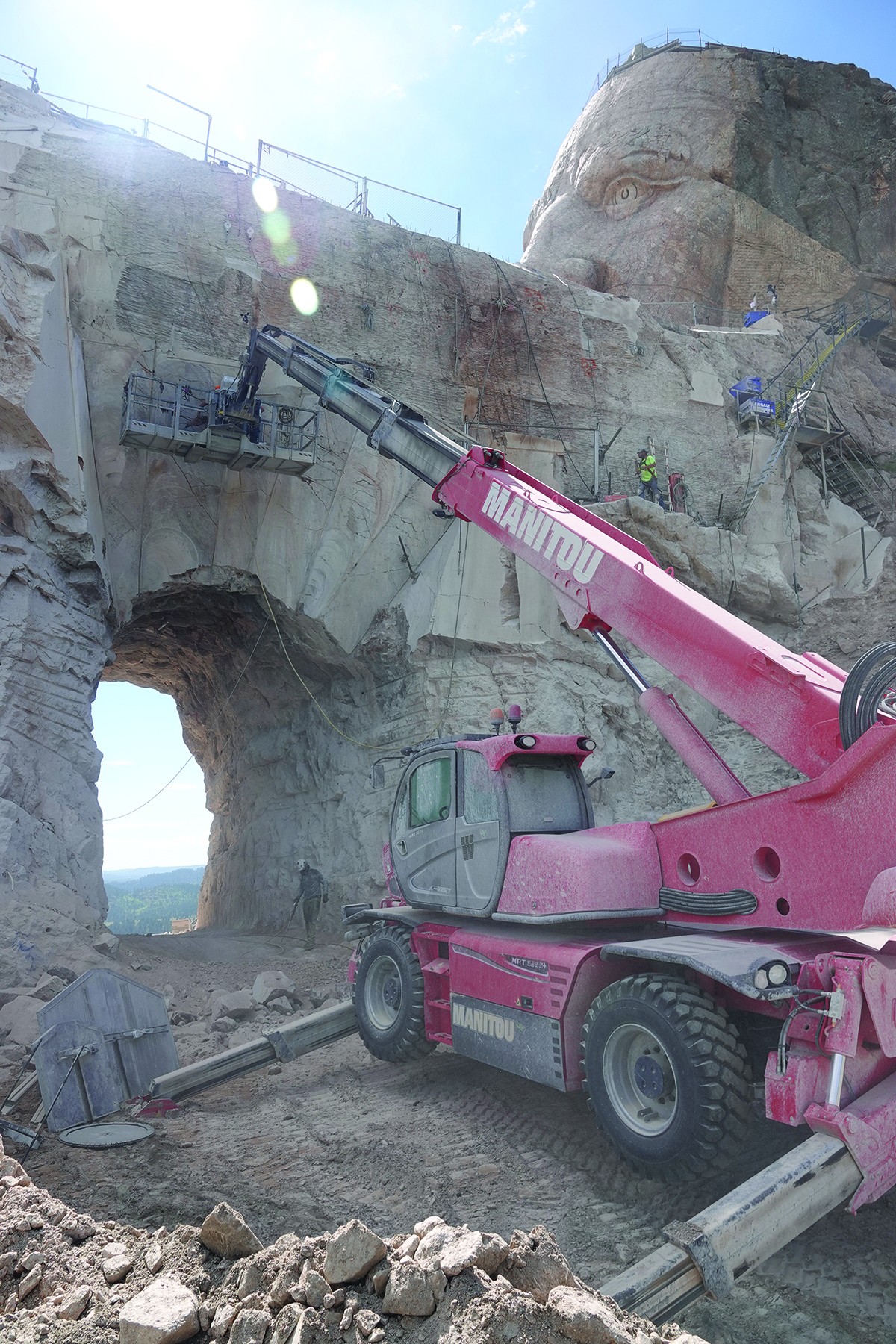
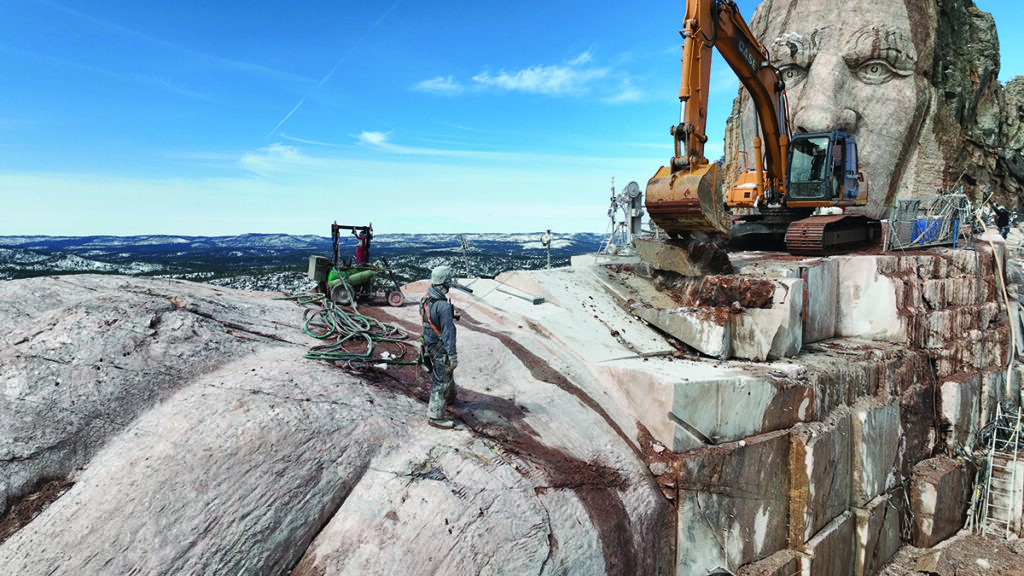
The back side of Crazy Horse’s Left Arm is a particularly challenging work environment. Not only does it tend to be cold (and around the tunnel, very windy), but also, in most areas, there is less than 5 feet of rock to remove before getting to finished grade. While this means less bulk rock to remove, it also means the area for people and equipment is limited. Often members of the Crew must work on a bench less than 2 feet wide for several days in a row. Fall protection is a must. There is little room for cable saws and mounting pulleys. Simply getting to the site is often a challenge. To get a sense of both the challenge of the work environment and the progress in this area, watch the embedded video, “Amazing Progress 2023 – 2024”.
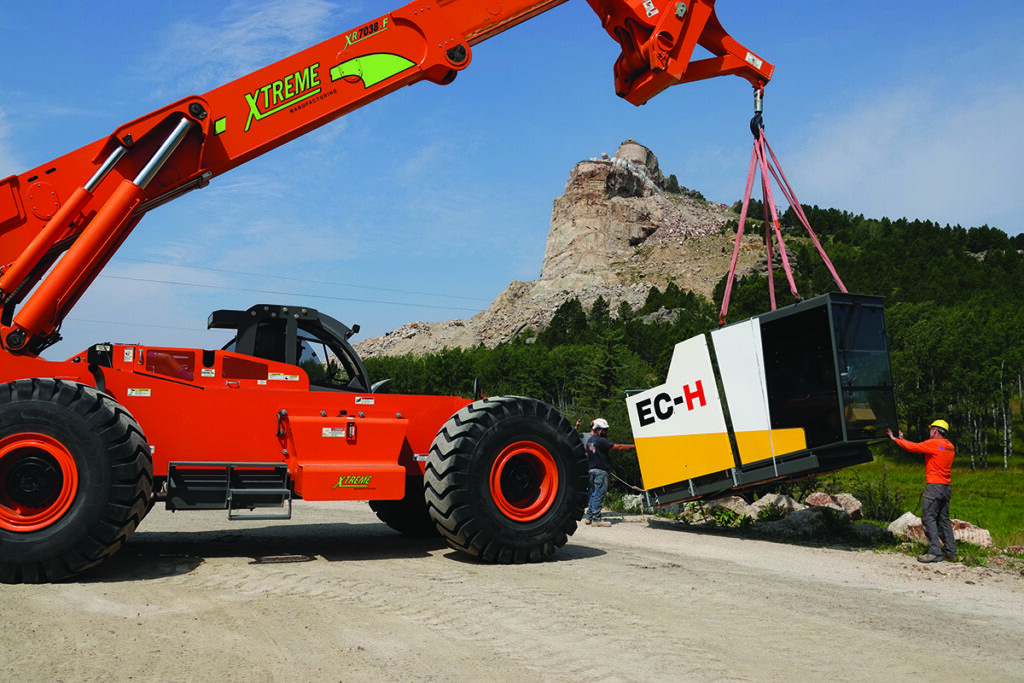
We had several other major projects which often took members of the crew away from removing rock. This reduced the raw number of people available to carve. Work on a new shop building, an innovative robotic arm, and installing a massive tower crane all demanded attention to different degrees. Further, the work on the back side of Crazy Horse’s Left Arm involves creating overhangs and expanding the opening of the tunnel, driving us to add significant rock support. More dowels have been put in the Mountain this year than any other year. We’ve completed most of an initial tunnel support plan that requires drilling around a miles worth of holes to install dowels. Most workdays, work on these dowels have taken 1 to 4 members of the Crew away from “carving.”
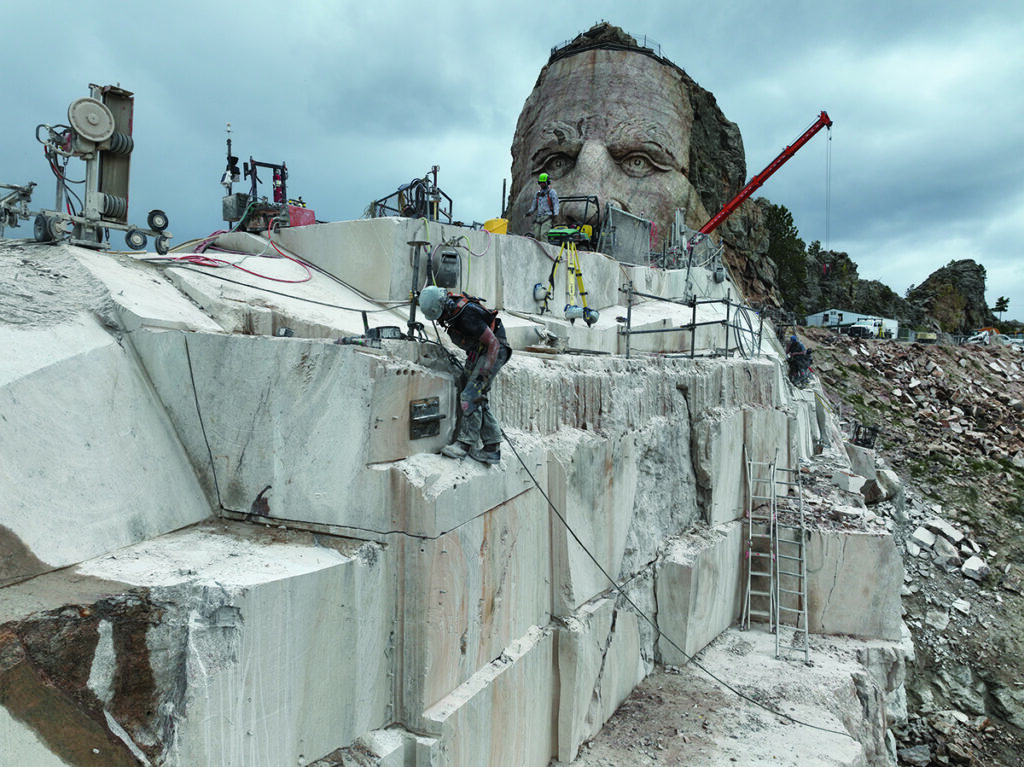
Finally, we have strategically avoided using finishing saws on the horse’s mane, even though some of it is ready for finish work. The horse’s mane will be around 32,000 square feet—nearly 7-times the surface area of Crazy Horse’s Face. Once we start using a given technique, we are, in a sense, locked in—we need it all to have a similar texture. The robotic arm offers new potential techniques for finishing work. We believe it could be used to create compelling effects when it comes to carving the horse’s mane. We are holding off on some finishing work till we have the robotic arm. In the long run, waiting for the robotic arm will almost surely be faster and likely look better. We will experiment with different approaches before choosing one to use on the horse’s mane going forward.
In sum, in the prior fiscal year we contended with the challenges of working on the back side, multiple major projects that diverted carvers from carving per se, and a strategically driven imperative to delay some finishing work. To still carve 3010.7 square feet of surface area within an inch of finished grade—one of the top two fiscal years in the history of mountain carving by this measure—represents a great achievement. This would have been impossible without the perseverance that defines this project.
Innovation Is Key,
We Want To Give It Space
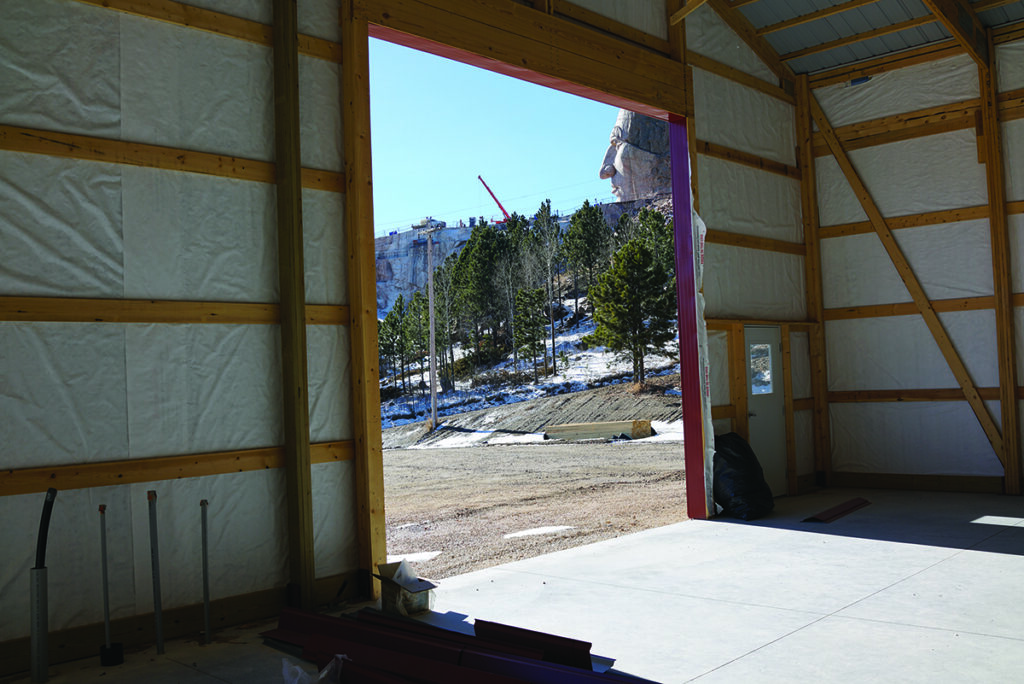
One of the keys that opened up the new era of carving was our shop facilities and staff with machining and fabrication skills, which will collectively be referred to as “our shop.” Finishing saws—heavily customized radial rail saws—have been instrumental in recent progress and would be impossible without our shop. Yet, our current facilities are cramped. We frequently cannot buy useful equipment because we lack space. In building a new shop building, a major driver is making space for innovation. Also of importance is creating more office space for technical support staff.
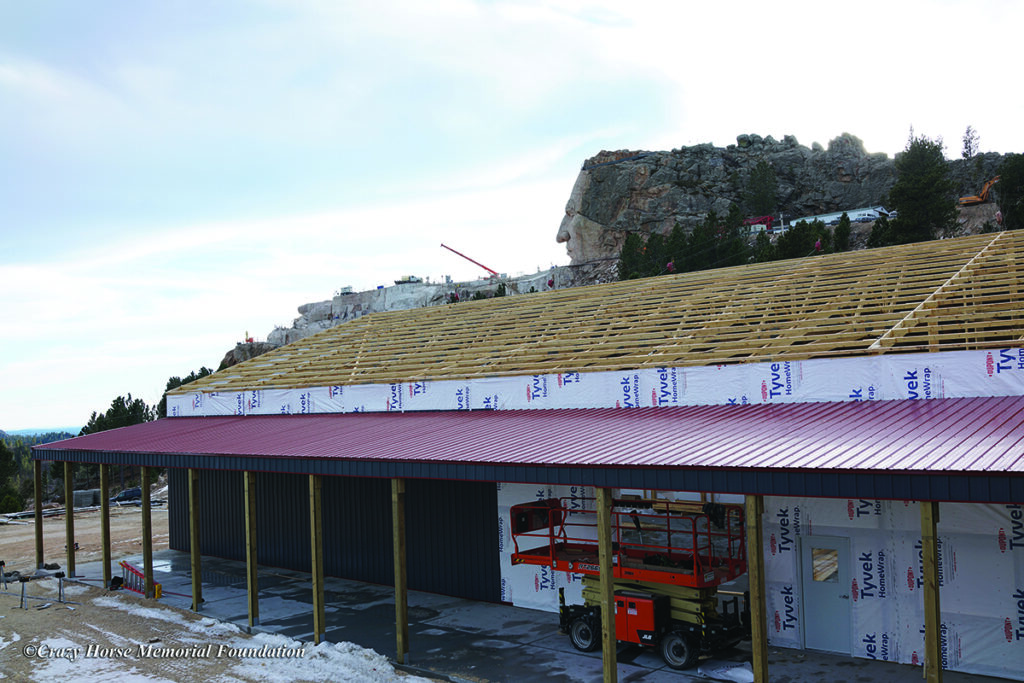
This project demands perseverance, tooYet, we have drove hard bargains. From our new shop budget we will not only have the building but also outfit it with equipment that will allow further innovation. This includes a bending machine, an ironworker with tooling, a second welder, a lathe, and extensive metal shelving and storage. We also have purchased a waterjet, which we expect to greatly reduce time at the mill for routine parts (perhaps reducing 2 months’ worth of work by a skilled machinist to about 3 days)2. When finished, our shop will have even more capacity to find new ways to carve the Mountain.
Who Can Integrate a Robotic Arm?
As soon as we saw the effectiveness of the finishing saws, we knew the process could be automated. Members of the Crew who run the finishing saws are the first to champion this possibility. Running a finishing saw combines the monotony of continually making minute adjustments for hours on end, with potentially large negative consequences for momentary lapses. We knew we would need help to do this. Even with all the skill on the Crew, sometimes innovation demands we find collaborators with one-of-a-kind expertise. As Chief Standing Bear could testify, finding collaborators can be hard—but it is usually worth the wait.
At Automate—the largest robotics show in North America—we went to every major manufacturer of robotic arms. We showed them photos and told them about Crazy Horse. We explained how we were using finishing saws. We asked if they had a robotic arm that could automate the process. They all said something like, “This is the coolest project ever! Of course, our robotic arm can do it! But…you’ll need an integrator.”
A robotic arm directly from the manufacturer could in theory do an infinite variety of tasks. In practice, without proper tooling and the way to instruct it to operate, it can do nothing. In the robotics industry, integrators are specialists who take the robotic arm from a manufacturer and equip it with the software and tooling needed to perform a specific task. We went to every relevant integrator at Automate (remember, it’s the largest robotics show in North America). We showed them photos and told them about Crazy Horse. We explained how we were using finishing saws. We asked if they could integrate a robotic arm to automate the process. They invariably responded, “This is the coolest project ever! And…we are not the company for you.”
The complexity of moving a large robotic arm around a Mountain, exposed to dust and the elements, deterred every one of the 30-some-odd integrators we approached. We exhausted the list of them at Automate. Before leaving Detroit, we had a final tour scheduled for a factory belonging to Fanuc, the world’s largest manufacturer of robotic arms. While on the tour, we showed our guide photos and told him about Crazy Horse. We explained how we were using finishing saws. We asked what he thought. He said, “This is the coolest project ever! And…I actually know an integrator who could do it.” We said we already talked to every integrator at the show. He said that Robotic Solutions, Inc. out of New Berlin, WI does not attend shows—they have all the business they need.
In October of 2023 we hosted Nick and Tom Bentley of Robotic Solutions, Inc. at Crazy Horse Memorial®. They wanted to inspect the site before we finalized any deal. We showed them the Mountain and told them about Crazy Horse. We explained how we were using finishing saws. We asked them what they thought. They said, “This is the coolest project ever! And…we are the only integrator that can do it.” By the end of their visit, they told us part of the purpose of the site visit was for them to ascertain if we would be capable of successfully deploying the robotic arm; we passed the test.
They are still working on integrating the robotic arm. Manufacturing delays meant they didn’t get the robotic arm until mid-September of 2024. During some testing, they were not happy with the performance of some of the tooling and are having parts reworked. They pushed back delivery to the spring of 2025. We see this thoroughness as an upside. We are happy to be working with such expertise and commitment to ensuring the robotic arm will work when it gets on site.
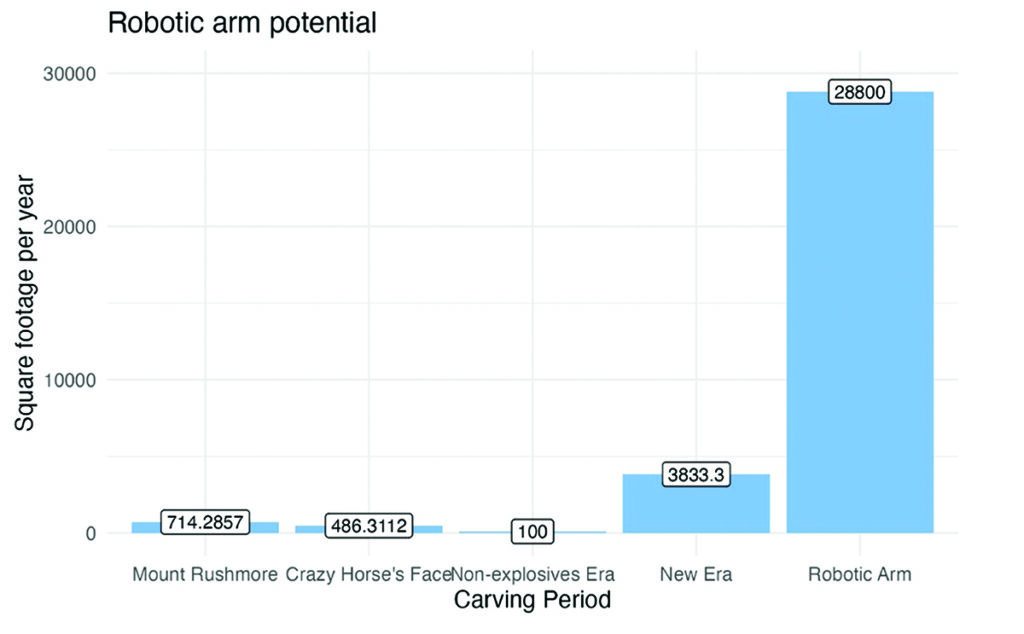
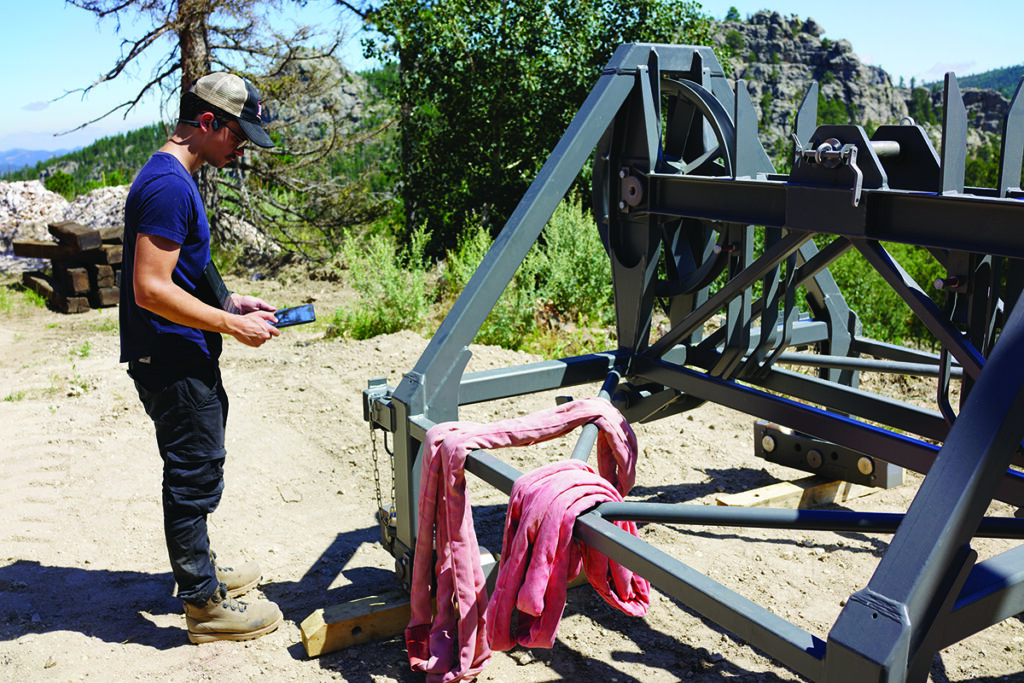
At the end of their trip in October of 2023, Nick and Tom also commented on what they saw as the capacity of the robotic arm. They said, based on seeing the site and the operation of the finishing saws, they thought, on a typical day, the robotic arm could finish a set up before noon. It could be reset and do another setup before the end of the day. Then, after we’ve done it 40 or 50 times and realize its reliability, we’ll check the evening weather and, if it looks clear, we’ll set it up a third time and let it run while we head home. Note that a “set up” for the robotic arm will carve around 80 square feet (the arm can reach 8 feet high has 10 feet of lateral travel. To get an idea for its size, watch the short, embedded video, “Size of the Robotic Arm.” The video shows a large man (Tom Bentley, around 6’4”) standing next to the frame for the robotic arm. If Tom and Nick’s judgment is correct, a typical day could see 240 square feet cut—leaving only torching and detail work to do. That is, in 2 days the arm could cover as much ground as the Crew did in a year of carving Crazy Horse’s Face. Put another way, 240 square feet a day could carve Mount Rushmore in 42 days—a couple of months if you take weekends off. Assuming the robotic arm completed 3 setups for only 120 days a year (there are 260 workdays a year), it could cover about 28,000 square feet. Figure 3 offers a comparison of this potential with other eras of mountain carving. The crucial question, Tom rightly pointed out, is whether we can finish other parts of the carving process quickly enough to keep the robotic arm busy. Doing so will be incredibly difficult. It could easily take years to accomplish that pace, if we ever do. Yet, it is a nice challenge to have.
Revolution Wanted;
Perseverance Require
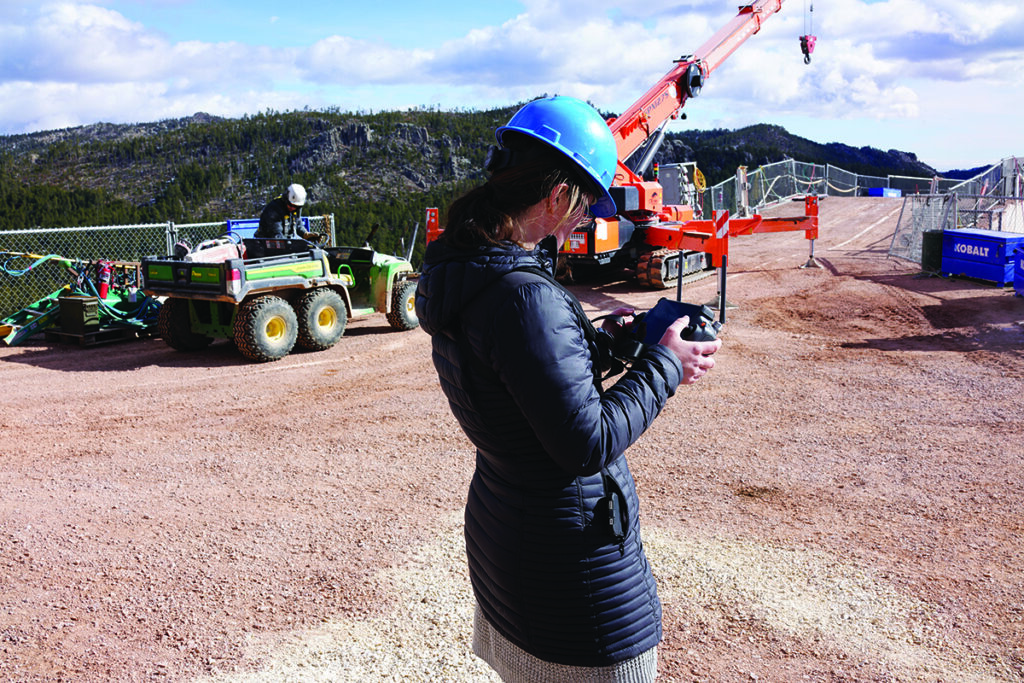
The incoming tower crane has the potential to revolutionize access on the Mountain. Without it, moving the robotic arm around the site would be impossible. Figure 4—a view from above Crazy Horse—provides a visual display of the working envelop of the tower crane. The tower crane’s range is compared to the much smaller range of our telehandler (“Manitou”), illustrating the massive difference the tower crane will make.
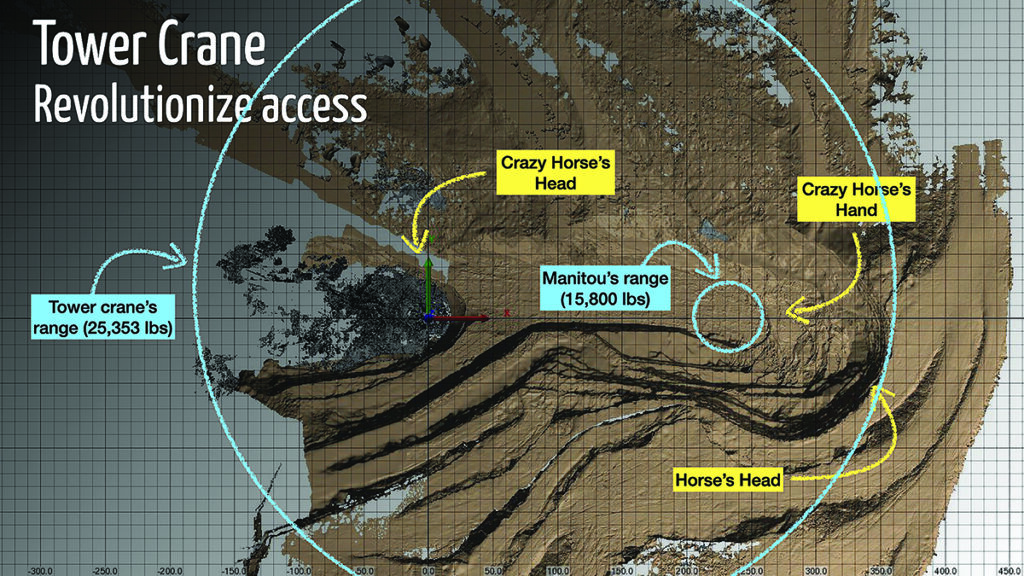
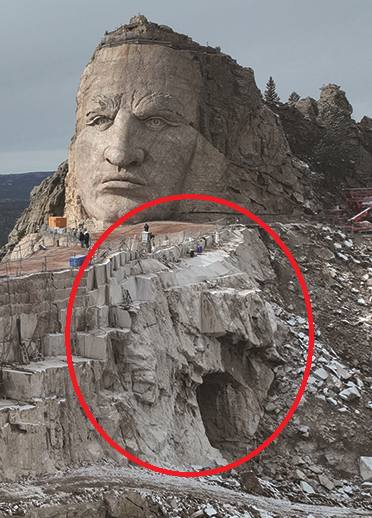
It is worth noting that for the tower crane to encompass the Carving as shown in the figure, it must be set within a couple feet of the Carving (next to Crazy Horse’s left triceps). The catch: when we purchased the tower crane in September of 2023, there were literally tons of rock in the way (see photo below of the knob from October 2023). Last fiscal year we removed 1,268 tons of rock in this area with cable saw cuts. We cut 1,396 square feet with finishing saws (note that, this work to prepare the site for the tower crane would have taken between 2 years at “Mount Rushmore Era” pace and 18.6 years at “Pre-2022 Era” pace. Being posed to erect the tower crane so soon is only possible in the “New Era” of carving). Because of this effort, we can set the crane 13 inches away from Crazy Horse’s Left Arm (maximum deflection for the crane at this height is 2.6 inches, leaving over 10 inches of cushion). Further, we have shaped much of the back side of Crazy Horse’s Arm so that, as the tower crane is erected, the photos and video from the event will show the incredible progress happening on the Carving. We have developed a plan to capture the tower crane erection from many perspectives, which includes having installed a timelapse camera on a peak behind the Carving which is continuously taking photos. The embedded video, below, shows an example timelapse from this location.
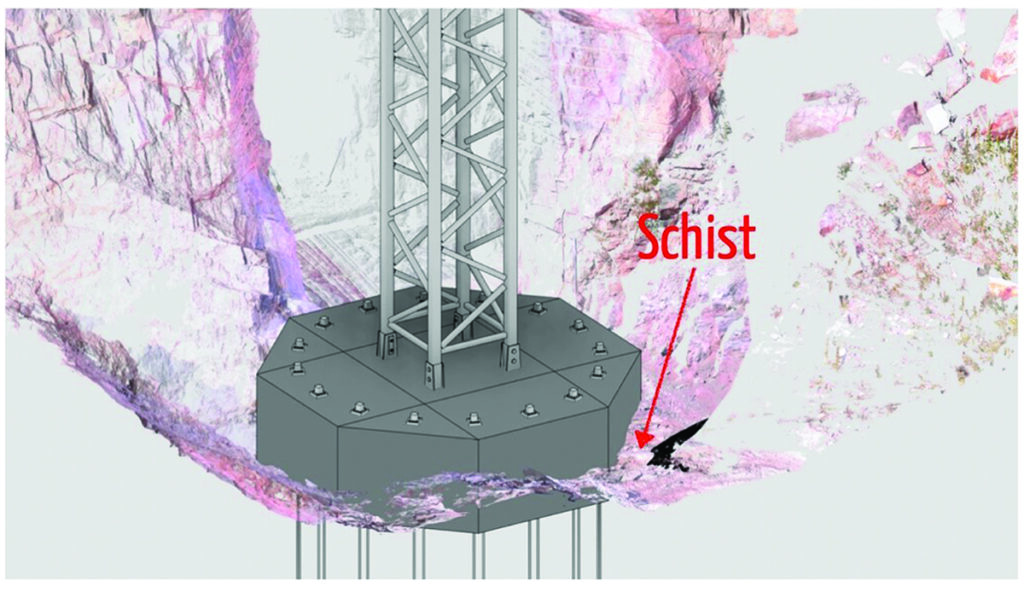
This project, too, has met challenges. While we had hoped for solid granite under the base of the crane, it turned out that just over half of the base was granite. The remainder was schist. Schist has a much lower bearing capacity (that is, it’s weak). If it had all been granite, we could have built a relatively small pad to support the crane (perhaps 20 feet by 20 feet and only a few feet thick). Instead, it was determined we would need an 8-foot thick, 28-foot-wide octagonal pad. Not only does constructing this take more material and labor, but we had to prepare a much larger area. We had to remove hundreds of additional tons of rock and further enlarge the tunnel opening. This added months to the site preparation time. We have finished this and even installed the 16 anchor dowels that will tie the pad to the earth below. Depending on the weather, the crane could be erected in May of 2025. Putting up this crane is itself a feat.
Small, Deliberate Steps
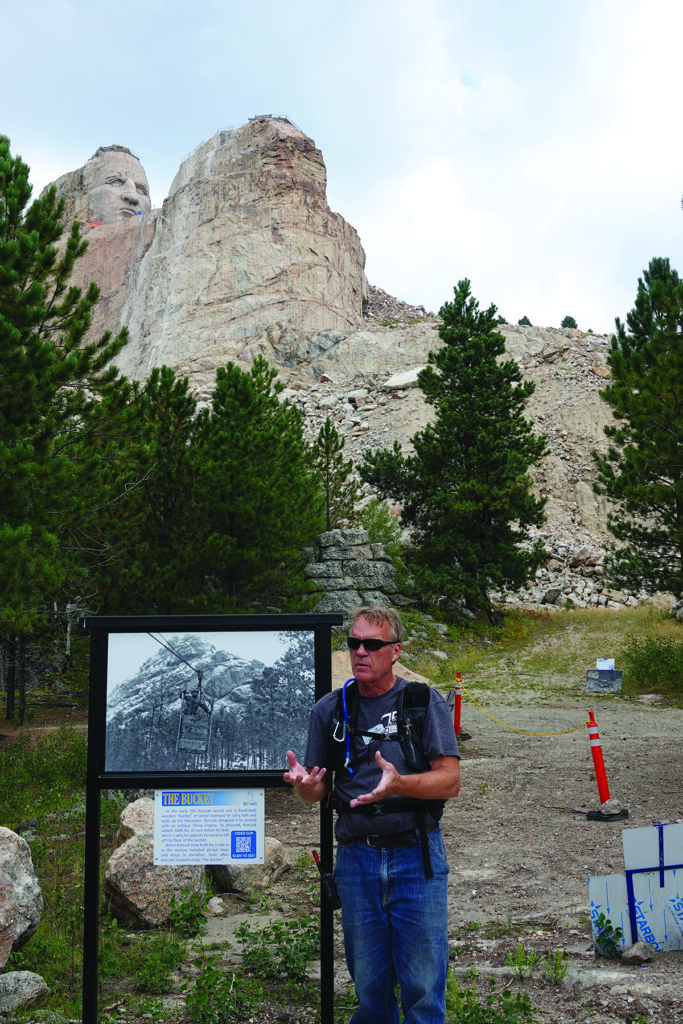
FY24 saw the first set of walking tours to the base of the Mountain. We have focused on offering a minimum viable product on an invitation-only basis. We have used the roll out to gather data to determine the potential value and impact of offering a broadly available nature trail. This step-bystep approach builds in perseverance.
So far, we learned that people that used the trail enjoyed it. When rating their overall experience, 98% of people responded “Very Satisfied” and 2% “Somewhat satisfied.” No one selected “Neither satisfied nor dissatisfied,” “Somewhat dissatisfied,” nor “Very dissatisfied.” 100% of guests said they would recommend the trail to others. 100% said they supported further development of the trail system at Crazy Horse Memorial®. Based on these initial results, we strongly belief a nature trail has the potential to powerfully enhance the visitor experience.
We also want to understand a nature trail’s potential to attract more visitors. To this end, we conducted a nationally representative survey of 1,032 people living in the USA. We determined that 433 of those sampled (about 42%) would likely find Crazy Horse Memorial®’s current facilities uninteresting. We found that 139 of these 433 (about 32%) indicated a basic trail would interest them3. Since this is a representative sample of residents of the USA, we estimate a basic trail would potentially interest 13.4% of the population—roughly 45 million people. These are people indicating no interest in our current facility offerings.
We took the opportunity to determine how the interest in a basic trail compares to the interest in facilities closer to the Mountain. Of those 433 not interested in our current facilities, 139 people (again, about 32%), found closer facilities interesting. These results suggest that, of people not interested in our current facilities, a basic trail would interest as many people as more substantial facilities built closer to the Mountain.
We also wonder how extensive our trail system should be. In addition to asking about a basic trail, we probed people on how other components of what could be described as a “trail system” would interest them. When taken together, we found that, of the 433 people likely uninterested in our current facilities, 273 people (about 63%) express interest in a trail system. Applying this to the population of the USA again, a trail would potentially interest about 87 million people who are not interested in our current facilities—basically double the number interested in buildings closer to the Mountain.
Magnitude of Vision
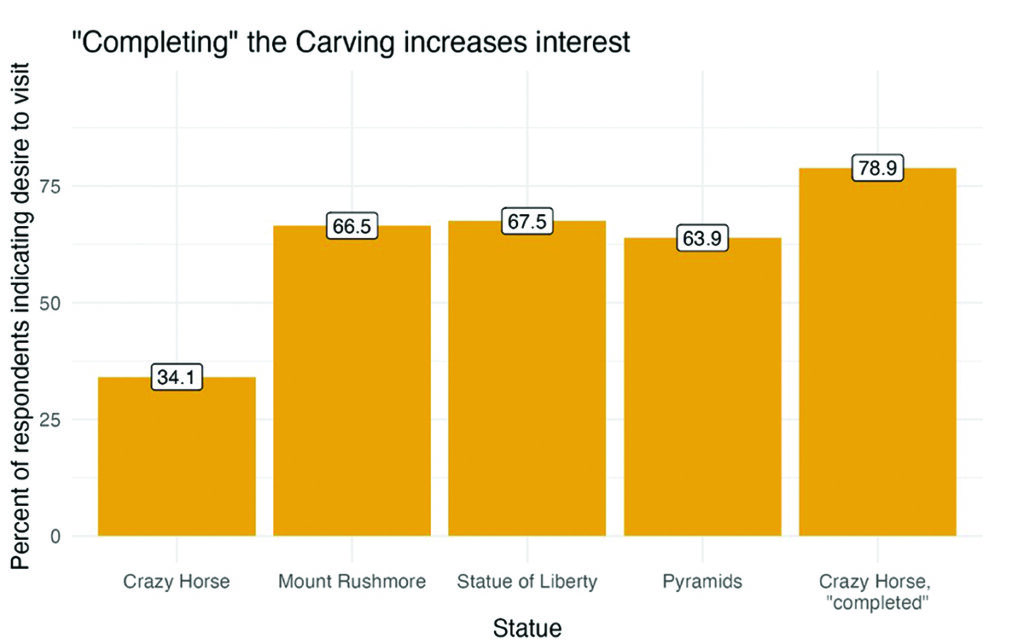
The national survey for the trail also afforded the opportunity to ask how progress on the Mountain Carving impacts people’s interest in visiting Crazy Horse Memorial®. The short answer: completing the Mountain appears to vault interest in visiting Crazy Horse from well below other famous landmarks to notably above them (see Figure 6). Of course, asking people their interest in seeing the finished Carving is difficult since it is so much bigger than other carvings—people simply do not have an adequate reference point to imagine what it will be like. Yet, when we ask them to try, we see that the magnitude of Chief Standing Bear’s vision has immense appeal. He wrote, Crazy Horse Memorial® will be “[t]he biggest thing ever to be brought about in the world’s history.” It looks as though the more we carve the Mountain, the more people will want to come see what Chief Standing Bear dreamt of so many years ago.
Conclusion
We’re invigorated to continue. Certainly, obstacles arise. They have never stopped the project before. They will not stop it now. We’re grateful of our rich history of perseverance and remain committed to the vision and mission of Crazy Horse Memorial®.
Endnotes:
i. George Washington’s head is 60 feet tall (https://www.nps.gov/moru/learn/kidsyouth/how-big-are-the-heads.htm). We know Crazy Horse’s Face is 87.5 feet tall (his head is even taller, but we have not finished above the face yet). The surface area of Crazy Horse’s Face (which we can have high confidence about) is 4863.11211 square feet. Using the formula for the surface area of 1/3 of cylinder to estimate Crazy Horse’s face and assuming the face is about 2/3 as wide as tall gives an estimate of (87.5 * pi * 87.5 * 2/3)/3 = 5345.071 square feet. Note this overestimates the surface area of the face by around 10%, making it a conservative estimator of the surface area of a face for our purposes—conservative because we are likely to understand the size of Crazy Horse Memorial relative to other statues. We can apply this estimator to Rushmore’s Washington; (60 * pi * 60 * 2/3)/3 = 2,513.274 square feet. Quadrupling to account for the four faces gives 10,053.1 square feet, which I round to an even 10,000 square feet.
ii. This estimate only applies to the statue, not the pedestal. One fast and dirty estimate: the surface area of a cone 150 feet tall and 35 feet wide is 9,265 square feet. A second approach: in many places, there is a textbook question dealing with this estimate. “You purchased a scale model of the Statue of Liberty. The scale is 1:456. The model is 8 inches high and has a surface area of 0.052 square feet.” Using these number, the surface area would be 0.052 * 4562 = 10,812.67 sq ft. Adding about 10% to be conservative and rounding gives 12,000 square feet.
iii. A taller statue (but less famous), Cristo de la Concordia, has a reported surface area of 2,400 square meters (https://en.wikipedia.org/wiki/Cristo_de_la_Concordia ), which is 25,833.39 square feet. It’s 108 feet tall and Christ the Redeemer is 98 feet. For Christ the Redeemer, an estimate of 25,600 sq ft is fair and, again, if anything an over-estimate and thus conservative.
Footnotes:
1. In response to a search for “largest carving in the world,” Google’s AI Overview reports, “According to most sources, the largest carving in the world is the Crazy Horse Memorial located in South Dakota, USA, which is a massive mountain carving depicting the Lakota warrior Crazy Horse; it is considered significantly larger than Mount Rushmore, with the head alone being bigger than the entire Mount Rushmore sculpture.”
2. The waterjet has been funded by $80,000 from the new shop allocation, $40,000 from the fiscal year 2025 budget (the waterjet’s functionality will replace the CNC mill we were planning to purchase), and $37,000 from an interested donor.
3. These are not all the same 139 people—some people seem more interested in walking, while others would like more elaborate facilities; the two groups overlap some and are the same size in the sample.